 Covenant Canyon
STAND WITH YAH — NOVEMBER 11, 2026 OBEY YAH RATHER THAN MEN Primary Scripture: Acts 5:27–32 Morning Focus: Facing the Man in the Mirror
OPENING QUESTION What do we do when human demands conflict with Yah's commands?
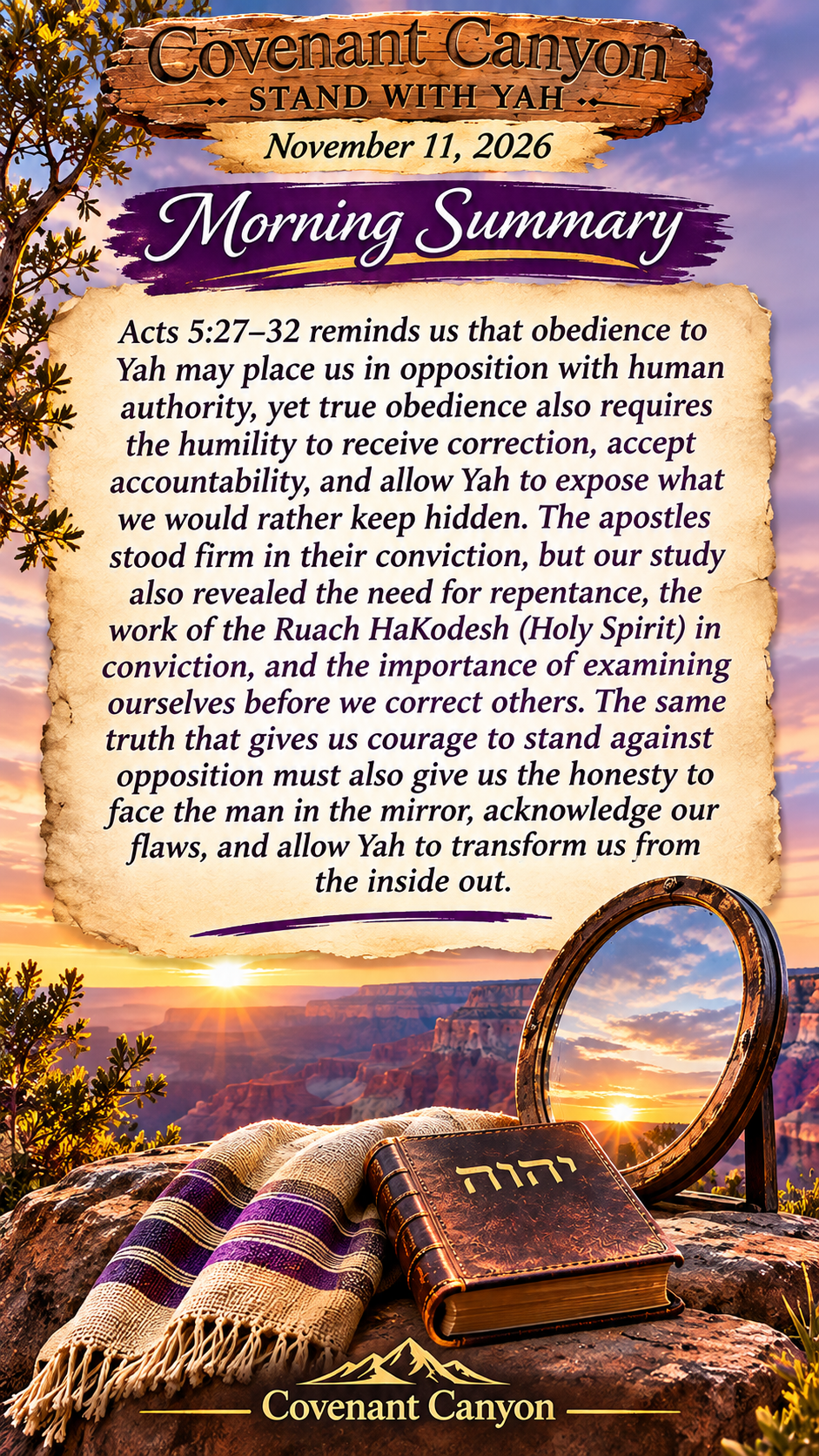
THE COURAGE TO STAND IN TRUTH — ACTS 5:27 The apostles were brought before the council because they refused to stop teaching in Yeshua's name. They understood the consequences, yet remained faithful to what they knew was true. Robin observed, “They stood on business,” and explained that choosing Yah sometimes means ruffling feathers: the apostles knew the truth and were determined to tell it regardless of what others had said.
This led us to Daniel 6:10: Daniel knew the decree had been signed, yet continued praying toward Jerusalem “as he did aforetime.” Daniel 6:26 records the king's subsequent acknowledgment of the living God. Our question was what obedience looks like when human demands conflict with Yah's commands. We distinguished such a conflict from the claim that every human rule is harmful.
WHEN TRUTH CONFRONTS AUTHORITY — ACTS 5:28 The high priest protested, “Yet you have filled Jerusalem with your teaching,” and accused the apostles of making the authorities responsible for “this man's blood.” We noticed that the authorities wanted the apostles to stop speaking in Yeshua's name, while admitting how far their witness had spread.
Robin reflected that they feared His name and did not want to take responsibility for what had been done unjustly to Him. We connected this confrontation to Matthew 27:25 and Luke 23:21, which record words spoken during the events surrounding Yeshua's crucifixion. This raised a searching question: Why try to silence the truth afterward when you refused to listen beforehand?
Robin said: “People want the power to make bad decisions but they don’t like facing the consequences of those bad decisions.” Another observation shaped the study: “You have the power to choose between right and wrong but you don’t have authority to tell a witness how to remember or respond to what you did.” We considered how a decision defended at the time can become painful to confront later, and how some try to protect their appearance by silencing testimony rather than acknowledging wrongdoing.
Proverbs 28:13 brought us to confession rather than concealment. John 3:19–21 brought us to light and the human temptation to hide deeds that need exposure.
REPENTANCE REQUIRES ACCOUNTABILITY — ACTS 5:29–31 Peter and the apostles responded, “We ought to obey God rather than men” (Acts 5:29, KJV). They spoke directly about Yeshua's death, resurrection, and exaltation. Peter also proclaimed that Yah exalted Yeshua to grant repentance and forgiveness.
This is the striking movement in the text: the truth that confronts wrongdoing also announces the possibility of repentance and forgiveness. Robin observed that those in authority would have to acknowledge being wrong before people they were accustomed to leading. “Most people don’t care about the truth they care about looking right,” she said. “To stand in truth means that you won’t always be right.”
Our discussion turned to the difference between remorse and repentance, and between preserving appearances and accepting correction. Proverbs 27:6 speaks of the faithful wounds of a friend: a true friend is willing to challenge a bad decision rather than merely approve it. We asked: Can someone truly confront the truth without also confronting their own part in it? And how often do people mistake the discomfort of conviction for an attack?
THE MIRROR MUST FACE US FIRST — ACTS 5:32 The apostles identified themselves as witnesses, together with the Holy Spirit given to those who obey Yah. Our focus moved from courage in facing external opposition to humility in receiving inward correction.
Robin described the Ruach HaKodesh (Holy Spirit) as the light that shines into every corner of us and exposes everything, not only what we are comfortable allowing to be seen. We connected this to John 16:8, concerning conviction, and to Hebrews 4:13, where nothing is hidden from Yah.
Then came the mirror. James 1:22–25 contrasts merely hearing the Word with actually doing it. Robin connected our discussion to the song “Man in the Mirror” and said: “Standing in that mirror ain’t only to fix what’s right it’s to see what is broken so it can be fixed.” A mirror is not only for appreciating what looks good; it reveals what needs to be addressed.
Psalm 139:23–24 became our prayerful cross-reference: “Search me, O God, and know my heart ... and lead me in the way everlasting.” David invited Yah to search every part of him and then to lead him. We asked: How can we ask Yah to show us the truth about ourselves if we have already decided there are parts we refuse to confront?
Robin then brought us to self-examination before correcting anyone else: “I can’t help you hold your mirror until I am willing to face my own.” Matthew 7:3–5 teaches that we must first deal with the beam in our own eye before helping someone else. The aim is not to abandon loving correction, but to approach it with honesty and humility.
Romans 3:23 reminds us that all have sinned and fallen short. We do not all commit the same wrongs, but none of us is without sin. 1 John 1:8–9 speaks of the danger of claiming to be without sin and the promise of cleansing when we confess it. Robin brought the thought to its conclusion: “Standing with Yah means that you face all parts of you not something’s.”
BRINGING OUR MORNING INTO FOCUS We began by considering the apostles' courage to obey Yah when others ordered them to be silent. We ended by examining whether we are willing to obey Yah when His Word corrects us. Some read Acts 5:27–32 and see strength in conviction; this morning Robin saw correction and repentance. Both are part of the call to obey.
Having authority to make a decision does not give us authority to control how others remember or respond to its consequences. We can defend the truth boldly while still resisting the work of that truth within ourselves. The Ruach HaKodesh shines light on what we have hidden or dressed up; we must respond with accountability, confession, repentance and a willingness to change.
The same truth we are willing to stand for before others must be the truth we are willing to receive when it corrects us. We cannot hold someone else's mirror while keeping our own turned away.
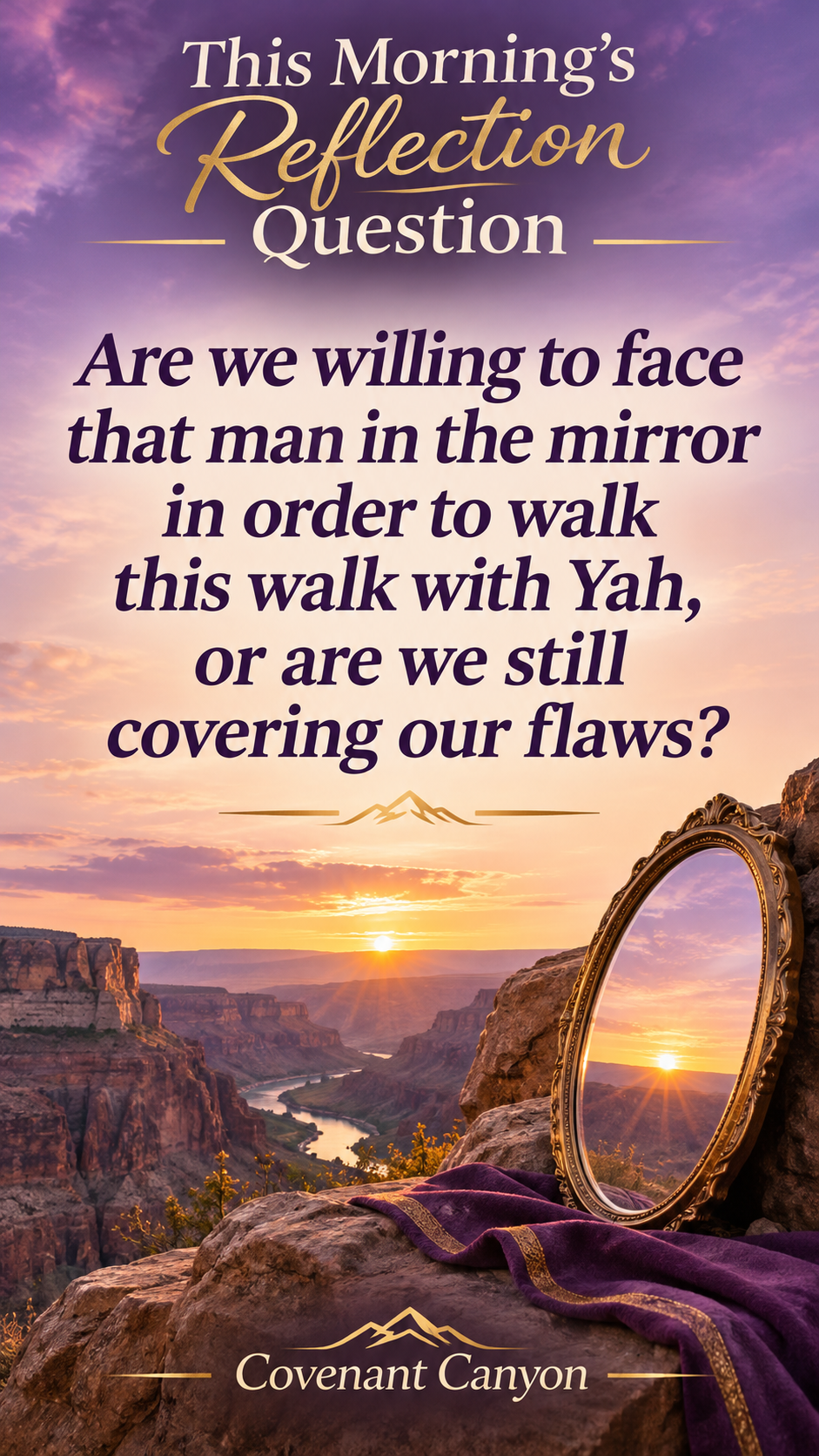
CLOSING REFLECTION QUESTION Are we willing to face that man in the mirror in order to walk this walk with Yah, or are we still covering our flaws?
Closing reflection question
Obey Yah Rather Than Men — Facing the Man in the Mirror
Morning lesson points
This Morning's Prayer
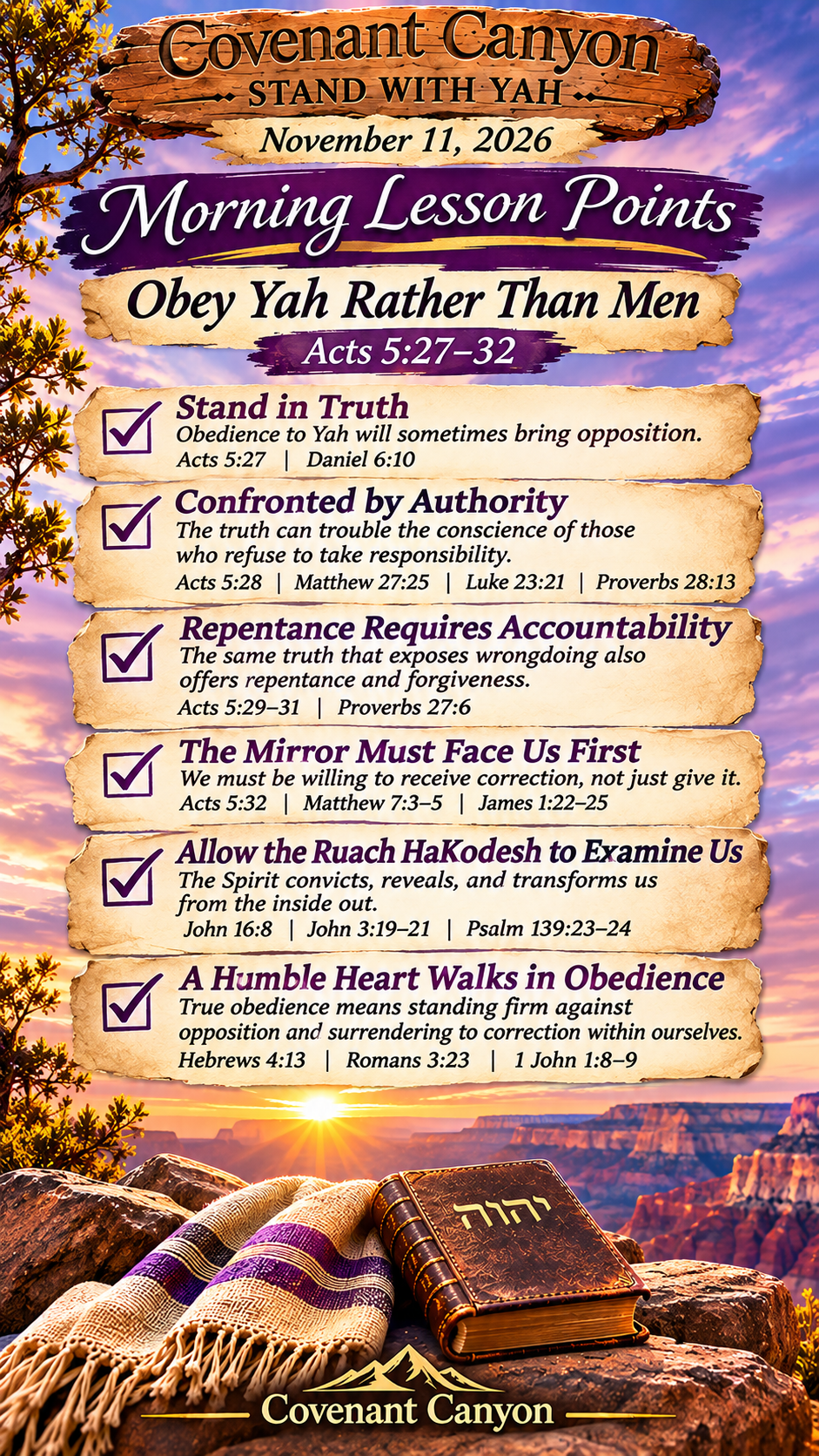
Abba Yah,
We come before You this morning, not asking You to examine the hearts of others before examining our own. Search us, Father. Shine Your light into every corner of our hearts, including the places we have tried to hide, excuse, or dress up to make our wrongdoing appear acceptable.
Teach us to stand in truth even when that truth reveals something uncomfortable within ourselves. Remove the pride that makes correction difficult and the fear that keeps us from acknowledging our mistakes. Help us understand that admitting we are wrong is not weakness, but an opportunity to grow in obedience to You.
Father, give us the courage of Peter to stand firm when others oppose Your Word, but also give us the humility to receive correction when Your Word confronts us. Let us never become so concerned with appearing righteous that we resist becoming righteous in our actions.
Ruach HaKodesh (Holy Spirit), continue to convict, guide, and illuminate our hearts. Help us face the reflection before us, accept responsibility for our decisions, seek forgiveness where we have caused harm, and make the changes necessary to walk faithfully with Yah.
As David prayed in Psalm 139:23–24, search our hearts, know our thoughts, reveal any wicked way within us, and lead us in the way everlasting.
We give You praise for Your truth, Your patience, and Your mercy, through Yeshua (Jesus).
HalleluYah! So be it according to Your Word.
This Morning's Prayer